Be yourself; Everyone else is already taken.
— Oscar Wilde.
This is the first post on my new blog. I’m just getting this new blog going, so stay tuned for more. Subscribe below to get notified when I post new updates.
Be yourself; Everyone else is already taken.
— Oscar Wilde.
This is the first post on my new blog. I’m just getting this new blog going, so stay tuned for more. Subscribe below to get notified when I post new updates.
Rathi Transpower Pvt Ltd. is a major part of the family-owned Rathi Group Pune. Lovejoy India is the sister company of the organization whose expertise lies in manufacturing and designing coupling for exacting power transmission applications.
The manufacturing facility has a huge range of machining and testing equipment. The processes have been updated over time with continuous improvement in machinery and technology.
Quality is built into every process and every stage of the manufacturing process.
Control of purchased material, process checks at every stage, and a very comprehensive final inspection process make sure that only good quality and confirmed products are sent out to the customers.
We offer our products globally and can offer a vast variety of range of couplings that are readily made available through the global distribution system.
Lovejoy Couplings has a huge range of products that suit every industrial need. With a huge range of over 10 to 15 main types of Coupling build with all industry standards.
These are some of the Coupling which is been offered by Lovejoy:
L
With its unique wrap-around Nitrile rubber connecting element, the Snap Wrap coupling eliminates the need for dismantling the connected equipment while inspecting or replacing the element – a major benefit when downtime on machinery can run into a huge amount
Combined with a range of prebored hubs, a modular hub design, and a spacer option, the Snap Wrap coupling is unsurpassed for quality, flexibility, speed for installation and maintenance.
H / HR
Individual free-floating load cushions held in place by outside steel collar. Completely machined castings with easy to assemble and disassemble. Inspection is possible all the time.
Know more at https://bit.ly/724ghhjvbj
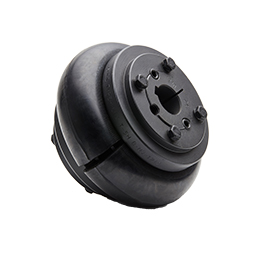
Rathi Couplings are one of the best coupling manufacturers in India. Our expertise lies in manufacturing Flexible couplings, Spacer couplings, Fluid couplings, Gear couplings, API couplings, Pin and Bush couplings, Disc couplings, and Tyre couplings.
Our manufacturing facility boasts of a broad spectrum of machining and testing equipment and our processes have continually improved over time. Our facilities are certified to ISO 9001 since 1993.
Rathi Couplings are industry leaders with a specialization in manufacturing spacer couplings, flexible couplings, and fluid couplings.
Few manufacturers globally can offer such a vast variety of standard range of couplings, readily available through our distribution system spread worldwide.
Our extensive product manufacturing expertise and our pursuit of synergies are the keys to providing the highest standards for our customers. This makes us global leaders in manufacturing couplings.
Quality is built into the manufacturing process at every stage. Control of purchased material, process checks at each stage, and precise final inspection ensure that only conforming products to our highest standards are sent to our customers.
Read more at https://bit.ly/246ghhjvbj
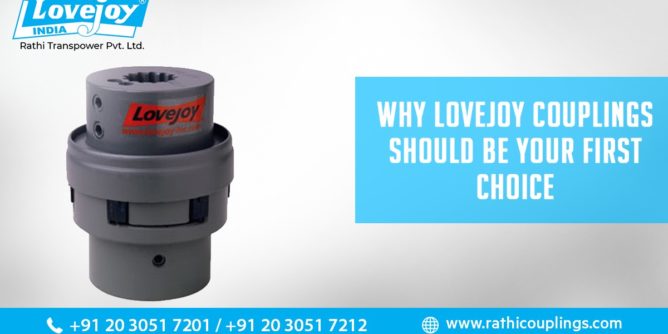
Rathi Transpower Pvt Ltd. is a major part of the family-owned Rathi Group Pune. Lovejoy India is the sister company of the organisation whose expertise lies in manufacturing and designing coupling for exacting power transmission applications.
The manufacturing facility has a huge range of machining and testing equipment. The processes have been updated over the time with continues improvement in machinery and technology.
Quality is built into the every process and every stage of the manufacturing process.
Control of purchased material, process checks at every stage and a very comprehensive final inspection process makes sure that only good quality and confirmed products are sent out to the customers.
We offer our products globally and can offer a vast variety of range of couplings which are readily made available through the global distribution system.
These are some of the Coupling which is been offered by Lovejoy:
Jaw Flex Coupling
L
With its unique wrap around Nitrile rubber connecting element, the Snap Wrap coupling eliminates the need for dismantling the connected equipment while inspecting or replacing the element – a major benefit when down-time on machinery can run into huge amount
Combined with a range of prebored hubs, a modular hub design and a spacer option, the Snap Wrap coupling is unsurpassed for quality, flexibility, speed for installation and maintenance.
H / HR
Individual free-floating load cushions held in place by outside steel collar. Completely machined castings with easy to assemble and disassemble. Inspection is possible all the times.
Read More: Various Applications of Couplings
Pin and Bush Coupling
B-FLEX: RB
B-Flex couplings consist of a set of resilient BARREL Shaped bushes with pins & nuts and two flanged hubs of graded cast iron.
The special BARREL shaped bushes permit the MISALIGNMENT IN ALL DIRECTIONS and give extra torsional flexibility as compared to plain bushes.
Read more at https://bit.ly/2F5mKNG or visit https://bit.ly/2YmjNOc
A flexible coupling exists to transmit control (torque) starting with one shaft then onto the next; to make up for minor measures of misalignment; and, in specific cases, to give protective functions. Flexible couplings are utilized to transmit torque starting with one shaft then onto the next when the two shafts are marginally misaligned.
Estimating and choice
The rich variety of accessible flexible couplings gives a wide scope of execution tradeoffs. While choosing among them, oppose the compulsion to exaggerate administration factors.
Coupling administration factors are planned to make up for the variety of torque loads typical of various driven systems and to accommodate sensible service life of the coupling.
Whenever picked too moderately, they can misguide choice; raise coupling expenses to pointless dimensions, and even welcome damage somewhere else in the system.
Keep in mind that properly chosen couplings more often than not should break before something progressively costly does if the system is over-burden, inappropriately worked, or some way or another drift out of spec.
Deciding the correct sort of adaptable coupling begins with profiling the application as pursues:
• Prime mover type-electric engine, diesel motor, other
• Vibration, both linear and torsional
• Shaft sizes, keyway sizes, and the desired fit among shaft and bore
• Shaft-to-shaft misalignment
• Axial (in/out) shaft movement, distance, and some other space-related limitations.
• Ambient conditions
Read more at https://rathicouplings.com/blog/flexible-couplings-what-is-it-and-why-its-beneficial/ or visit https://rathicouplings.com/
Types of Couplings fall into two fundamental classifications: Material Flexing Couplings and Mechanical Flexing Couplings. The material flexible types acquire their flexibility from extending or compacting a versatile material, for example, elastic, or from the flexing of flimsy metallic circles or framework.
The jaw couplings are types of couplings that transmit torque through the pressure of an elastomeric insect addition put between two intermeshing jaws.
•Flex component is ordinarily made of NBR, polyurethane, Hytrel or Bronze
•Accommodates misalignment
•Transmits torque
•Used for torsional hosing (vibration)
•Low torque, broadly useful applications
The sleeve couplings are types of couplings that transmit low to medium torque between associated hardware in shear through an elastomeric embed with male splines that mate with female hub splines.
The supplement material is ordinarily EPDM, Neoprene or Hytrel and the addition can be a couple of piece design.
•Moderate misalignment
•Torsional hosing (vibration)
•End drift with slight hub freedom
•Low to medium torque, universally useful applications
Read more at https://rathicouplings.com/blog/major-different-types-of-couplings/
Flexible couplings are utilized to transmit torque starting with one shaft then onto the next when the two shafts are marginally misaligned.
A flexible coupling exists to transmit control (torque) starting with one shaft then onto the next; to make up for minor measures of misalignment; and, in specific cases, to give protective functions.
In simple words, it can be said Flexible couplings are used to transmit torque from one shaft to another when the two shafts are slightly misaligned.
In this example, the test fixture is using a torque transducer as torque senor for measuring torque. In this example, the flexible couplings are used to connect the motor and torque sensor with the workpiece.
These two couplings need to minimize any misalignment error since the torque sensor needs to lay as flat as possible. They also need to protect the sensor from overloading.
Major characteristics of the flexible couplings are very low or zero backlash, good torsion rigidity as good lateral, and angular misalignment capabilities making them suitable for various applications.
At first, flexible couplings separate into two essential groups, metallic and elastomeric.
Metallic types utilize freely fitted parts that roll or slide against one another or, on the other hand, non-moving parts that bend to take up misalignment.
Elastomeric types, then again, gain flexibility from resilient, non-moving, elastic or plastic elements transmitting torque between metallic hubs.
Read more at https://rathicouplings.com/blog/flexible-couplings-what-is-it-and-why-its-beneficial/

Manufactured for a variety of hydraulic applications, a right coupling ensures a fast and efficient connection and disconnection of liquid supply lines. As it is used for a variety of heavy industrial applications, including chemicals, oil refineries, steel mills, etc., it is critical to select to invest in the right coupling. Read on to discover the major factors to consider when buying the right coupling:
Flow
The system flow rate is one of the most significant factors to inspect. System designers should aim to minimize pressure drop to avoid system inefficiency when considering coupling size and internal valving.
Pressure
Pressure has an impact on all the components of quick coupling, hence improper pressure application can lead to disastrous results.
Air inclusion and spillage
Air inclusion is the small amount of air infiltration into a system when a coupling is connected. This only applies to couplings that close at the interface, before the valves are open.
Spillage should not be confused with leakage as it refers to a small amount of fluid that is lost with the disconnection of coupling that is disconnected.
Know more at https://rathicouplings.com/blog/tips-for-the-right-coupling-selection/ or visit https://rathicouplings.com/
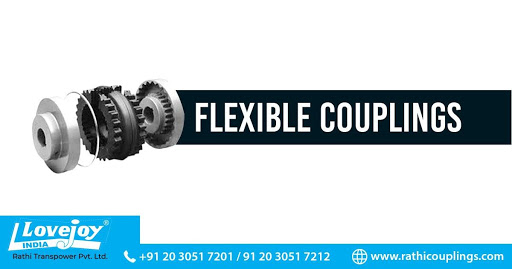
Flexible couplings are utilized to transmit torque starting with one shaft then onto the next when the two shafts are marginally misaligned.
Flexible couplings can oblige fluctuating degrees of misalignment up to 3° and some parallel misalignment. Likewise, they can also be utilized for vibration damping or noise reduction.
A coupling intended to permit a constrained precise movement between the axis of two waveguides.
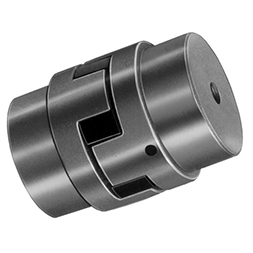
Rathi Couplings are one of the best coupling manufacturers in India. Our expertise lies in manufacturing Flexible couplings, Spacer couplings, Fluid couplings, Gear couplings, API couplings, Pin and Bush couplings, Disc couplings and Tyre couplings.
Know more at https://rathicouplings.com/

Types of Couplings fall into two fundamental classifications: Material Flexing Couplings and Mechanical Flexing Couplings. The material flexible types acquire their flexibility from extending or compacting a versatile material, for example, elastic, or from the flexing of flimsy metallic circles or framework.
Material flexing couplings don’t require lubrication, except for grid couplings.
The mechanical flexing couplings acknowledge misalignment from rocking, rolling or sliding of metal surfaces. All metal mechanical flexing couplings require lubrication.
The jaw couplings are types of couplings that transmit torque through the pressure of an elastomeric insect addition put between two intermeshing jaws.
•Flex component is ordinarily made of NBR, polyurethane, Hytrel or Bronze
•Accommodates misalignment
•Transmits torque
•Used for torsional hosing (vibration)
•Low torque, broadly useful applications
The sleeve couplings are types of couplings that transmit low to medium torque between associated hardware in shear through an elastomeric embed with male splines that mate with female hub splines.
The supplement material is ordinarily EPDM, Neoprene or Hytrel and the addition can be a couple of piece design.
•Moderate misalignment
•Torsional hosing (vibration)
•End drift with slight hub freedom
•Low to medium torque, universally useful applications
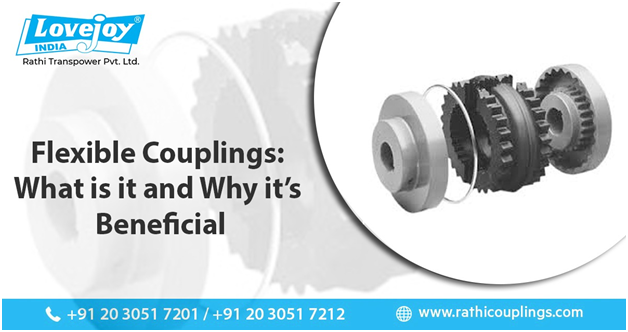
Flexible couplings are utilized to transmit torque starting with one shaft then onto the next when the two shafts are marginally misaligned.
A coupling intended to permit a constrained precise movement between the axis of two waveguides.
A flexible coupling exists to transmit control (torque) starting with one shaft then onto the next; to make up for minor measures of misalignment; and, in specific cases, to give protective functions.
Thus, industrial power transmission regularly calls for adaptable as opposed to rigid couplings.
At the point when the opportunity arrives to indicate substitutions for flexible couplings, it’s human nature to take a simple way and just discover something comparable, if not identical, to the coupling that failed, possibly applying a couple of larger than average fudge components to be moderate.
Too often, however, this training welcomes a repeat disappointment or costly system damage.
The wiser methodology is, to begin with, the assumption that the past coupling failed because in light of the fact that it was the wrong sort for that application.
Taking time to decide the correct kind of coupling is worthwhile even if it confirms the past design.
However, it may lead you to something very surprising that will work better and last more.
In simple words, it can be said Flexible couplings are used to transmit torque from one shaft to another when the two shafts are slightly misaligned.
In this example, the test fixture is using a torque transducer as torque senor for measuring torque. In this example, the flexible couplings are used to connect the motor and torque sensor with the workpiece.
These two couplings need to minimize any misalignment error since the torque sensor needs to lay as flat as possible. They also need to protect the sensor from overloading.
Major characteristic of the flexible couplings are very low or zero backlash, good torsion rigidity as good lateral and angular misalignment capabilities making them suitable for various applications.
For more information visit us at https://rathicouplings.com/
Have a WordPress.com account? Log in now.